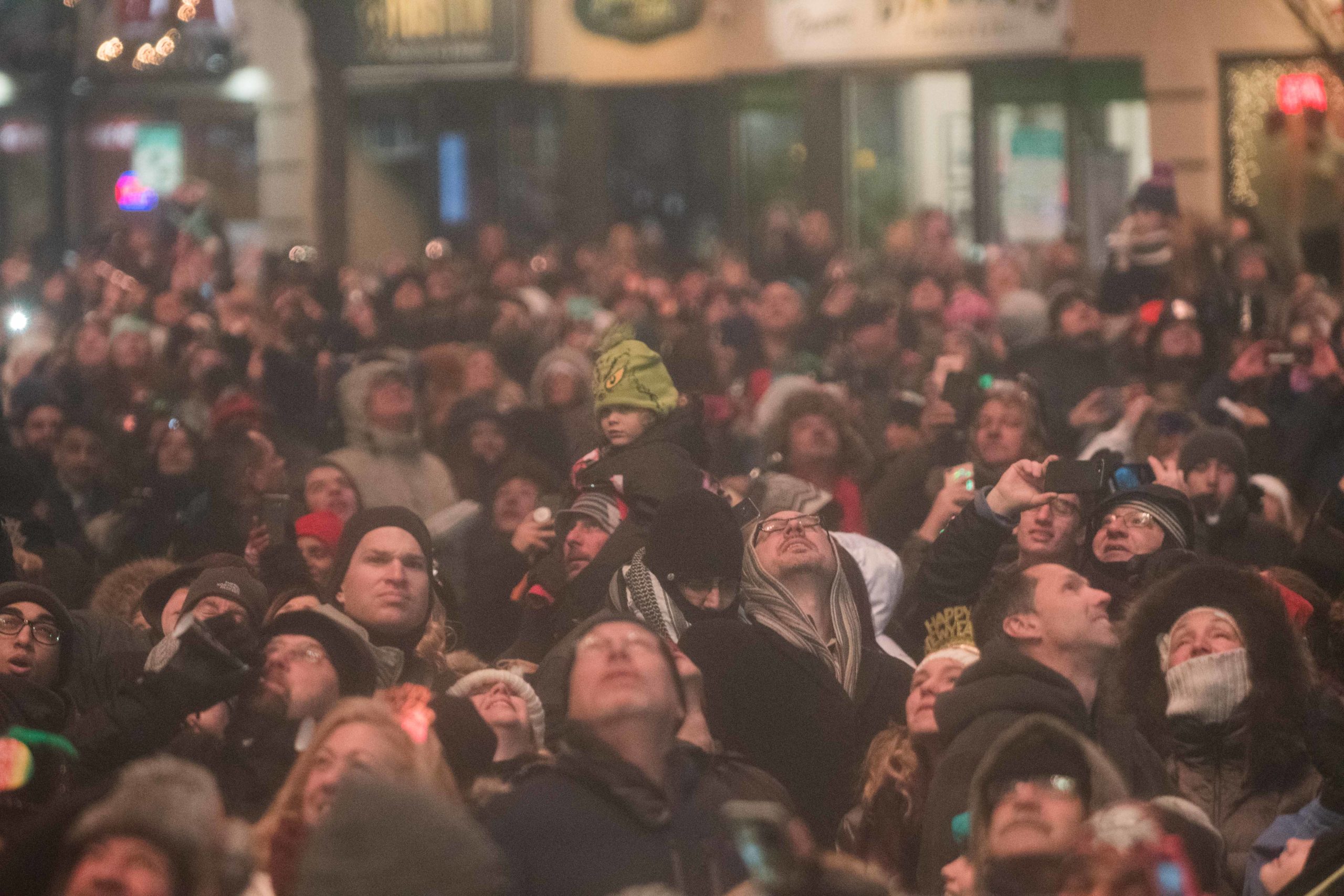
lakewoodtestifiers SACRAMENTO—By the time the sixth aye vote was cast late Wednesday afternoon, the one that officially moved Assembly Bill 1174 out of the Education Committee and into the Appropriations Committee, the Sacramento Seven had been flying high for three or four hours. Not that they’d actually arrived at the airport for their return trip to Long Beach.

But the seven students from Lakewood High School who had come to Sacramento as representatives of their 45-member Civic Voice class—the creators of AB 1174, a piece of school-safety legislation—to dutifully lobby and testify for the bill, departed the Education sac7edcomagenda Committee Room having defied the gravity of their self-doubt. It didn’t look as though they’d be coming back to Earth anytime soon.

AB 1174 would make it a misdemeanor for a person to willfully disturb a public school activity—including students’ arrival and departure from campus during school hours—and the advocacy by the Lakewood High contingent had tightroped the delicate line between the safety of minors and freedom of speech.

“Your presentations were excellent,” said 55th District Assemblyman Warren Furutani, who has mentored the Lakewood High students’ legislative effort, when the group reconvened in his office for a debriefing. “You were simple, clear, calm, direct and sincere. Very impressive.”

sac7planeride Sort of redemptive, too.

Although they’d been nicknamed the Sacramento Seven, and while exactly that many of them jetted from Long Beach to the state capitol early Wednesday morning, they were most definitely not rocking any superhero style when they rolled into the Capitol Rotunda.

Despite dreaming of this day since the start of the school year and preparing for it since returning from winter break, the immediate prospect of testifying before the Assembly Education Committee seemed to have drained these kids of enthusiasm. They were perhaps understandably sleepy, but also disconcertingly uncertain.

Their principle spokesperson, Terrell Snead, had inherited that position rather suddenly only a week or so before, when his predecessor had to opt out of the trip to Sacramento because of a scheduling conflict—his role in the school play. sac7capitolpose

Like everyone else in the Lakewood High contingent, Snead was struggling to find the right words, well, not so much to describe the bill, but to, well, you could say, tell people that it’s good, and stuff. After sharing a classroom for eight months, they didn’t appear to be united by much more than a general perspective.

But the path to the Education Committee Room rambled up and down the halls and stairs of the quirky Capitol Building and ran in and out of the offices of most of the committee’s members. In the course of lobbying these lawmakers to support their bill, the Sacramento Seven worked out their ideas—and the exercise transformed their flabby opinions into well-defined positions.

sac7capitolhallway By lunchtime, Kaitlyn Miller could feel the difference.

“Before, it was a project,” she told her young colleagues, who had gathered in Furutani’s office for a final strategy session and pizza. “Now it’s a passion. I realize that this isn’t a freedom-of-speech issue—it’s a public safety issue.”

That’s the way the entire Sacramento Seven played it throughout their Education Committee appearance. The plan was for Snead and Miller to give two-minute presentations, but when Brandon Perez saw there were three seats available at the table, he secured the blue ticket that entitled him to one, then rushed out into a corner of the lobby to hurriedly put together an address. sac7salayamillersnead

Snead went first, staring for a moment into faces of the 11 legislators perched above him on a horseshoe-shaped dais before he starting to speak.

“My name is Terrell Snead and I am a sponsor of Assembly Bill 1174,” he began. “This bill is about safe schools. Our schools should be solicitor-free. AB 1174 offers protection against adults soliciting minors outside our schools. It protects students from other disruptive activities on their way to and from school.

“Current law only provides safety for students when they are on campus—there is no method for protecting them off campus. This bill will protect them when a responsible adult is not present.”

Miller went next.

“Students are a captive audience,” she pointed out. “They cannot simply choose to walk away from solicitors outside their schools. They have to go to school as mandated by the state. I have personal experience with this—being handed Bibles or fliers, being late to school because people were soliciting me and blocking my pathway to get to school.” sac7moretestify

Then came Perez, who had been reading and re-reading the mini-speech he’d just composed on index cards right up to the moment that all attention landed on him.

“My name is Brandon Perez, and I am asking for your support of AB 1174,” he said. “This bill proposes a safety net for students traveling too and from schools. People say [that minors interacting with adult solicitors] could be a learning experience. But the opinions of these solictors are usually biased and they don’t allow input from students to make learning experience. There is no guard or filter to the information.”

After the four other members of the Sacramento Seven paraded to the microphone to lodge their support for the bill, the students heard from opponents to the bill—principally, the American Civil Liberties Union, which objects on the grounds that it would infringe on freedom of speech.

sac7furutanigroupshot This may have been the hardest part, the students reflected afterward.

“That was horrible to sit through,” said Terrell. “I kept wanting to respond.”

“I had the urge to run up and grab the microphone!” chipped in Andrew Stockwell.

Teacher Wendy Salaya smiled. “I’m glad you restrained yourself,” she said.

Furutani let everybody blow off steam for a bit, but eventually refocused attention on something they may have forgotten for a moment. It’s not over for AB 1174—nor for the Sacramento Seven.

“Our next stop is the Appropriations Committee,” Furutani said. “We need to start the next discussion.”