ON THE DAY AFTER THE END OF THE WORLD, THE PEOPLE PARADED WITH PRIDE
By Dave Wielenga
On the day after the end of the world, the people held a parade. It was the same parade they’d been holding for years before the world ended, but considering the new circumstances, the skip-and-hop along Ocean Blvd. added another aspect of pride to a tradition based on it.
A big crowd showed up, and it included just about every kind of somebody, each of them looking unmistakeably like who they are, nobody getting ugly about those who looked or lived differently. Well, almost nobody. Here and there, a few groups of Christians stained one of their Lord’s blessed Sunday mornings by waving tastless signs and using a bullhorn to alternately fill the air with their own perverted insults and passages from the Bible that seem to have been selected to make the Holy Book sound like pornography.
Of course, these were the same people who just a day before had brought us the end of the world.
But the tolerant behavior of everybody else was meaningful, a little piece of proof that, wherever they may be going from here, the people may be able to simultaneously live the principles of individualism, diversity and unity. Back before the end of the world, that always sounded good but tended to fall apart when somebody or their needs were overlooked or unmet.
But the people who came to the parade on the day after the end of the world aren’t known for going unnoticed. They tend to turn out … well … turned out—in outfits often more accurately categorized as costumes than ensembles, especially at a parade. Oh, do they love a parade!
They traipsed along in wearable collages of unpredictable colors, unusual lines, provocative cuts and outlandish accessories that had been mismatched and remixed with such abandon that their fashion
statements had become incoherent—except, maybe, for the word “sexy.” These getups can get very get-down.
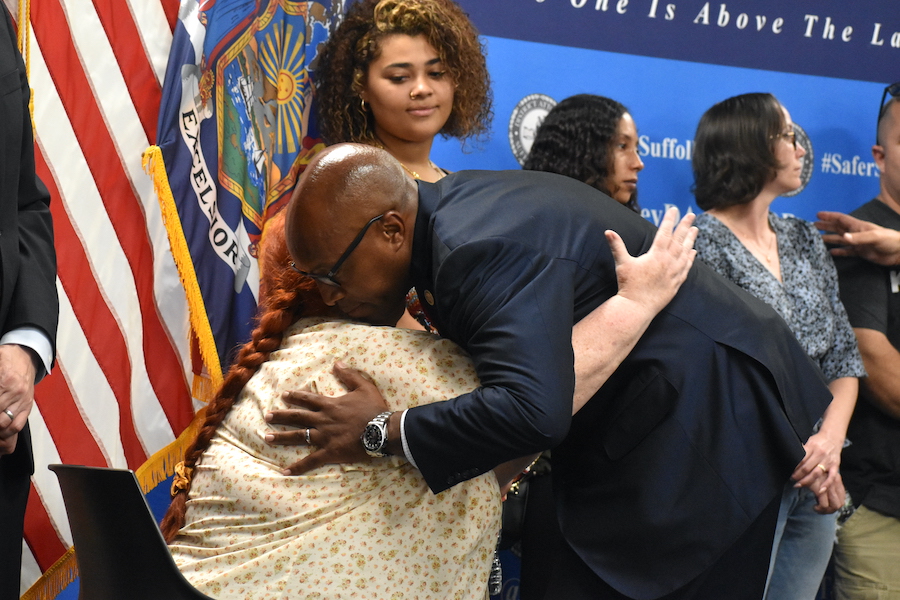
On the day after the end of the world, the people said hello to nearly everyone they met. Most of the rest got a smile or a nod—or a second look, which sometimes turned out to be the best greeting of all. The people hugged a lot, occasionally for a little too long. They laughed a lot, almost always far too loudly. They talked a lot, frequently at the same time. But it didn’t matter, because they promised to do some real catching up later. “I’m on Facebook,” the people often said. Or just about as often, “Google me.” Although they truly intended to do it, they kind of knew they might not.
On the day after the end of the world, the people cycled and skated and bladed and
boarded and hobbled on stilts. They walked, many hand-in-hand, and in every kind of gendered combination. But most of them spent a long time looking for a place to park their cars. Plenty of them brought kids, carrying the youngest—or pushing
them in strollers or pulling them in wagons—and permitting those a little older some practice in crowd navigation. A few were on leashes. At least as many of the people brought their dogs, carrying the smallest, chauffeuring others in strollers and wagons—sometimes sharing space with the kids—and in a couple of cases, bicycle baskets. Most were on leashes.
On the day after the end of the world, the people found happiness in the silliest of things—many of them in stuff that was just plain stupid—and they just couldn’t seem to get enough of whatever it was.
The Sisters of Perpetual Indulgence, a ghoulish troupe of dudes-look-like-Our Lady, hip-faked its way past the sacrilege and into an endless ovation. The Dykes on Bikes revved their engines, and thousands of knees got weak—maybe because of the ravenous sound of the engines or the hungry looks in the riders’ eyes. Santa
Claus in hot pants? It was hard to imagine that anything could ever get a bigger laugh … until the arrival of some out-of-shape dudes who were dressed as though they were college-girl cheerleaders who were performing routines as though they were middle-aged dudes.
But it wasn’t just contagious laughter. When the Harlequin-on-stilts in flowing white robes and massive butterfly wings tottered the crowd was hushed by awe, as if it had witnessed an artistic masterpiece come to life—or a playing card, anyway. Moments later, when a contingent of police in the parade sounded their sirens, the crowd howled in response.
On the day after the end of the world, the people couldn’t stop dancing. The music barely seemed to matter.
Whether it was Lady Gaga through a premier sound system, a Big Band on a flatbed truck, an acoustic accordion-and-guitar combo that seemed straight out of a medicine show or some electronica made indecipherable by dials-turned-to-10 distortion through the speakers, the people danced. True, most of them didn’t dance very well, but you really didn’t want them to stop—because then you would have had to stop dancing, too.
And that would have been a terrible beginning to whatever everybody just began on the day after the end of the world. Let’s hear it for the hereafter!