ZOMBIE WALK’S LOGAN CROW: YOU CAN’T KEEP A DEAD MAN DOWN
By Jimmy Dolan
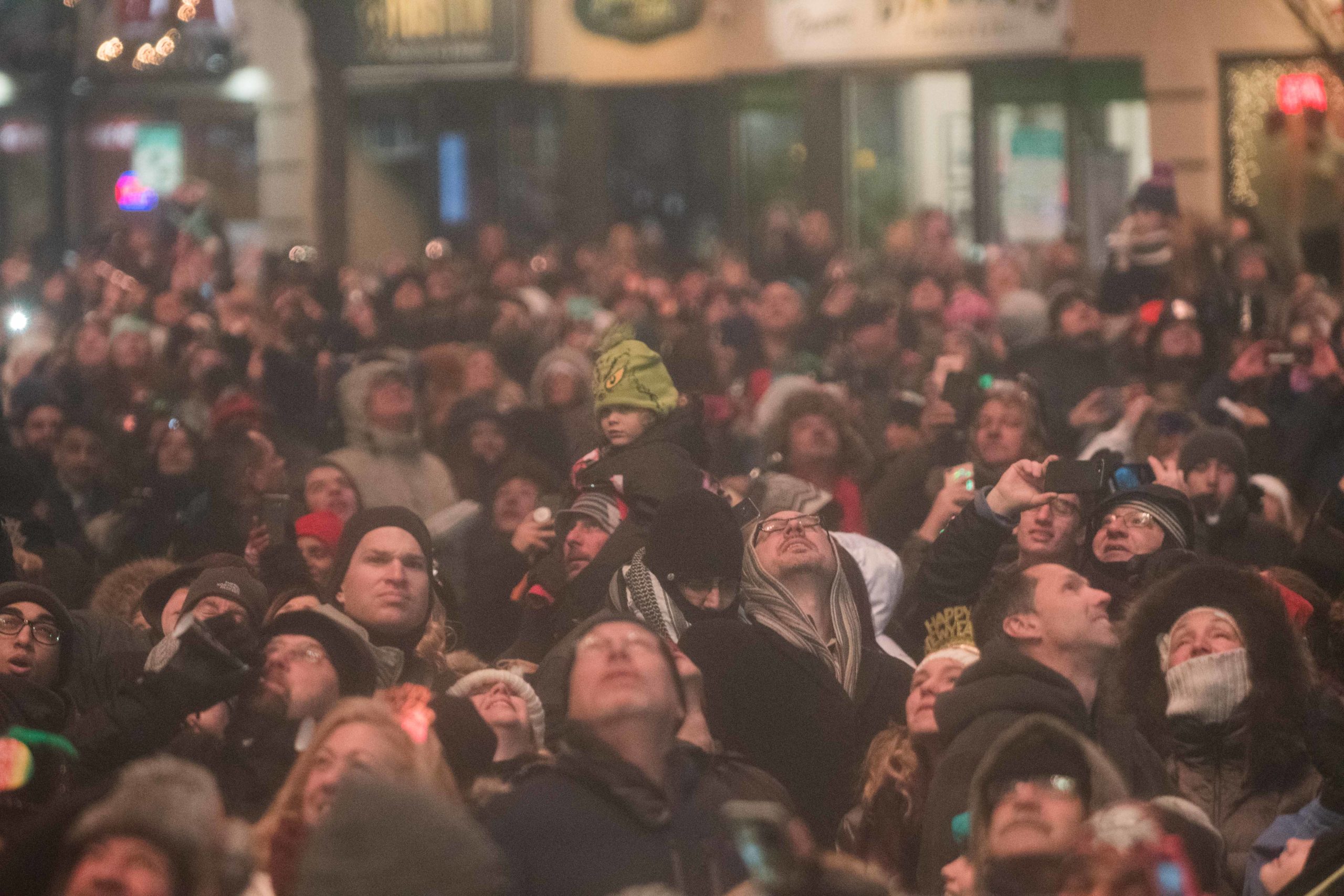
Logan Crow is a busy man. He’s been planning one of Long Beach’s largest events—the Long Beach Zombie Walk Festival—since July. The 2011 event, which came downtown for the first time, might best be described as a “catastrophic success.” Thousands of people showed up and took over downtown, but Crow was left with enormous debt, and plenty of anger. So why did he seem so cheerful to meet up to talk about it? For one, we met at a bar. But more importantly, things have changed. Zombie Walk V is set to return to downtown Long Beach, with a new venue, a new festival format, and a new relationship with the city.
Jimmy Dolan: So, I don’t want to bring up the dirty past, but I guess we should start by talking about last year.
Logan Crow: Hahaha.
JD: Well, I was there last year and it was awesome, but then a couple days later we started hearing about what a mess it was.
LC: And it was, and I think that there’s been a lot of, for me, due re-examination and reflection on … how should I put it? Well, I’ve always been a huge fan of Long Beach. I really care about the city. But interestingly enough, that whole experience kind of—let’s just say, how my words and my feedback about the event affected conversation. It wasn’t just me. I don’t want to say, “Oh, I did this interview and it changed everything.” I was one of a continued wave of rising voices saying, “Look, we’re not trying to be punks about it, or just out there to bitch and whine. We want to see amazing things happen for this city full of amazing people that are ready to do amazing things—and we need to be helped, not hindered.” I’ve always been a balanced kind of guy. I understand the need for safety and all that. I’ve had awesome conversations after last year with all the people who are in positions to reflect on last year and see where everyone maybe didn’t do their best—including myself—and it’s been a completely different experience this year.
JD: Really? How so?
LC: Working with the city has been very smooth. And I think also… Long Beach is very segregated, and it kind of bums me out. I don’t think it’s any particular district to blame. Having done events now on 4th Street, and now downtown, knowing people in Bixby—there’s a lot of “not moving around.” People stick to their comfort zones.
One of my big experiences from last year is when I started talking up doing the Zombie Walk downtown, I was surprised to hear that even though we had done it three years on 4th Street, and had such amazing success, I saw a lot of blank faces, like, “What is this zombie thing?” They needed to see it. There were a lot of people who, back then, kind of looked at me funny when I talked about the event, who are now totally behind it. That was my biggest surprise—‘Are you not aware of what we’ve done the last three years in a row?” And I’d hear, “No, tell me about it.” And I’d be like, “What? It was two miles away!”
But it goes both ways. I have friends on 4th Street and I’ll ask if they want to meet at a downtown restaurant, and they say, “Oh no, I don’t go downtown.”
JD: I guess that surprises me.
LC: Well, people are invested in their turf. They’re invested in this city, but it’s “I love 4th Street; I love North Pine, I love Bixby Knolls.” It’s great, because that’s where community starts—knowing who your favorite waiter is at your favorite restaurant. But at the same time, if we’re not moving around, we’re all gonna be hurt. We have to move around the community and support other businesses and areas. I mean, I’m generalizing, sure, not everyone is like that.
I guess my point is, last year I wanted to bring something very large and epic to downtown. I certainly had advocates for it. But there was a lot of concern: “Well, what if it’s just a bunch of punks who come down here and smash the city up?” A mentioned a sexy zombie contest: “What if girls go topless?” And I’m like, “What are we talking about?”
So, that’s all gone away. It’s been a total one-eighty. I mean, you still gotta have the meetings, you still gotta have the fencing, still have to have the security, you have to do all that. I’m down for that. But there’s the other end of the spectrum. People were griping, “It sucks you have to pay the city to do your event.” And, no it doesn’t.
JD: That’s kind of how it works.
LC: Right, that’s how it works. My issues were very specific. I feel like roadblocks were being thrown my way. That should not happen. Period. Give me my guidelines but don’t restrict me.
JD: So what about on 4th Street? I wasn’t here for that.
LC: The first two times we did it, we didn’t get any permits or anything.
JD: You just did it?
LC: Yeah, but the city caught wise about it and about a month before the third one they called me for a meeting and said, “Look, we’re not telling you to shut this down, but we don’t know about this. There’s considerations.” And they were really cool to work with. So we closed the street off, we had over 3,000 people, and it was awesome. But it was clear then that we’d have to go bigger.
JD: Three thousand is a lot for 4th Street.
LC: Right. And when we talked to the city afterwards, we were talking about different options. They just communicated a lot of things like, “Look, you just went from 700 to 3,000. Now you’re talking about breaking a world record,” which was Seattle’s 4,700, “you can’t do it on 4th again.” Right around that time I had my office on Pine Ave. and the landlord said to me, “Well, bring it here; we’ll close off Pine Avenue!” I was like, yeah!
JD: Well, the plans for Pine didn’t even happen last year, right?
LC: No. Well, I’m really excited about where it’s moving. There’s a lot of flexibility. It’s a festival at this point. We’re still going to have our walk. It’s going through Rainbow Harbor. We’ll see businesses and stuff, and I always thought a zombie walk belonged in a metropolitan area for two reasons. One is the visual: zombies marching through the businesses. And well, number two is for the businesses: if you’ve got 10,000 people marching down Pine Ave. they’re going to eat and drink. I’d still love to see that happen, but I think it will take the event being a little more firmly grounded as a Long Beach institution.
JD: Seems like it’s headed that way
LC: Maybe another year of showing that nobody gets hurt, that it’s family-friendly. And more financial support—it’ll be very expensive to put on Pine Ave.
JD: Well, serving alcohol alone is costly.
LC: Right. But it’s just been great when we talked about moving it to Marina Green Park. And I started thinking, “If we’re in a park, what can we do?” We can do two stages on each side, we can do a 50-foot screen. And everything we threw the city’s way, they’ve just been cool—here’s how you can do this, this is what you need to do that. I really do feel like we will have found our venue at the end of this year. I’m already so comfortable about it, but there will always be a walk and where that goes remains to be seen.
But, we’ve been working with downtown Long Beach this year to identify ways, if the zombies are coming into Marina Green Park and our event is over at 11, thousands of people are looking for something to do. So downtown has been partnering with us to find really cool after-party events, and even before. That entire day, you can take your zombie ticket to any of these places and get discounts. There’s after-parties that are doing discounts. Madigan’s, Harvelle’s, George’s, there’s a club in LA with a $15 cover—it’s free for our people. It’s really great the way the event’s so all over the place. And it’s so fun.
JD: I remember last year coming out of Comic-Con and walked outside and stood on the corner of 1st and Promenade where there were so many people. I mean, probably 10 cops just right there directing traffic and every time the light changed at least 600, 700 people walked across the street and we just sat there and took pictures. It was something else. Do you know what attendence was last year?
LC: The estimate I’ve heard most often was 12,000 to 14,000.
JD: No kidding.
LC: I’ve heard from some city people, closer to 8,000, but that didn’t factor in the people at the Press-Telegram building watching Oingo Boingo playing and all the people that came through the day to do their make-up.
JD: So either way, it beat Seattle.
LC: Oh yeah. The thing is, though, with Guinness, you have to show proof. This was a total learning experience for me, putting together an event this size. We had one photographer doing these quick shots and he just couldn’t handle it. We talked to Guinness, but we have no proof. But we smashed it, we at least doubled it. It’s all moot, though, because two weeks later Mexico City had like 17,000 people. It’s amazing. It’s all over the place.
JD: San Pedro has a zombie 5k coming up.
LC: Yeah, there’s that. Long Beach Bootcamp is doing a 5k here in the morning.
JD: What time does the Zombie Walk start then?
LC: At 7 p.m. The gates open at 3 p.m. Bands go on at 3 p.m., play all night on two stages. At 7 p.m. we’re doing a Thriller mob dance with Thrill the World. There’s going to be Thriller flash mob dances all over the world, and it’s the second year in a row they’re coming to Long Beach to do it. Thriller ends, the gates open, the walk starts through Shoreline, and we come back. Music keeps going, movie starts at 9:15 p.m.
JD: It seems like music festivals in general are getting more recognition. I mean hell, NPR covers South by Southwest. I’ve always felt like Long Beach needed something to stand out. We have all this creativity and it’s far enough from LA to be it’s own thing. Maybe that’s Zombie Walk. How many bands are playing anyway?
LC: Fourteen. Shoreline Village has a stage, we’ll have a DJ booth at the bandshell. So much of it has happened organically. Really it was Zombie Walk III. We were on 4th Street and Lola’s had just bought outdoor speakers to have scary ambience-music. So the walk happens, and the whole reason we even started it was to promote our [Long Beach Cinematheque’s] midnight series. What was interesting was, the walk happened, the theater filled up and sold out, and it was still happening. They were just standing there, so Lola’s started playing their music louder and people started dancing. They stuck around. I was like, “OK, there might be a festival happening here.” Our walk was always at 7, and we had people doing make up from 11 that day… and people are just rolling in to get their makeup done all day long. By 3 or 4 o’clock, there were just zombies everywhere.
So I got my brain turning and realized people want more than just the walk, they want a full experience, and where can we go with that? I think to be fair, I didn’t take a baby step to the next thing. But I think it was clear from last year that this is something people really dig. The one distinctive change this year is that we have to charge—there’s no way around it. But, we got really creative and came up with a way that the ticket would have its own value beyond the event: the zombie-friendly businesses, the discounts, the afterparties, tickets to the Laugh Factory, discounts at the Aquarium, all of it. And, two stages of outdoor music, movie, etc.—well worth fifteen bucks. And your kids are free. We got a little resistance at first, you know, “Hey, you weren’t charging last year, you’re charging this year.” But now the e-mail are totally different. It’s “Hey, we just used our zombie passport at Lola’s, we think this is so cool, keep it up.” You know, when you go from free to charging, it will upset some people. What’s interesting is, we’re still getting new ears, people who have never heard of this thing, have nothing negative to say. People who are familiar with it might jump on the whole “Oh, you opportunistic scum,’” but you have no idea how expensive this is. And at the end of the day we’re trying to raise money for our foundation.
JD: Well, that’s what great about Long Beach. There are so many people with great ideas and I think in many other cities they have no idea what to do with great ideas or how to go about making that happen and it just dies. Long Beach is lucky enough to have a lot of people get behind a creative idea.
LC: And that’s the thing. It takes me back to, you know, I’ve met a lot of people in Long Beach who do have great ideas and whose ideas are “community-first” ideas, and we have exchanged war stories, you know. It’s has been frustrating, but again, I have to give Long Beach a lot of credit because I’m seeing changes. Just the way conversations are happening. The way that some of yesterday’s questions aren’t an issue, and the way that the new questions are more of a service question instead of a restriction. It’s “How can we?” instead of “You cannot.”
JD: Maybe this is just me, but I feel that a lot of people don’t understand how the Downtown Long Beach Associates (DLBA) works. I’m sure there’s plenty of people who don’t necessarily know it’s there.
LC: Right.
JD: A lot of the time last year, you were dealing with them. And it seems a lot of people in Long Beach don’t really know about it until they see a logo on a poster or something, or really know what it does.
LC: The DLBA is entrusted with activating business in downtown Long Beach, maintaining a positive economy and the visual improvements of downtown, an aesthetic. And it is also entrusted with creating and executing events throughout the year that bring good numbers and different demographics to our community both from within and out of Long Beach to familiarize themselves and patronize downtown businesses. I’m actually on their marketing and events task force now.
JD: Oh wow. Is that recent?
LC: About four or five months. It’s a good mix of voices; there’s a lot of old-guard type people and a lot of new-guard and what I like about the meetings I’ve been to it that it doesn’t seem like anyone has their ears shut to anyone else. I actually really enjoy the discourse, and being a newer person in the group, I’ve had people say, “Oh that must have been crazy for you.” But no, it’s wonderful, because people are speaking and listening. That’s the first thing we need to do. Not everyone’s going to agree with you when you walk into a room. The one thing you can hope for is a dialogue. I feel like there’s a freshness that’s coming in that’s being listened to and considered.
JD: How so?
LC: I’ll give you a perfect example. Last year, when I was talking about the numbers I wanted to bring into downtown and breaking the world record and etc., somebody kinda raised an eyebrow at how low my marketing line was on my proposal. Because I wasn’t spending an arm and a leg on print and postcards and TV and newspaper; I was spending 22 hours a day on Facebook and Twitter. I found myself in a position to have to advocate for the value of social networking. What was cool was someone else in the group spoke up and said this is something we may need to consider. What is the value of someone spending countless hours on social networking? And that’s really cool that a whole conversation happened. Someone just had to say “Let’s talk about this.” And social networking has been integral to this event. The first three were pure social networking. We didn’t even have a website! The website popped up between Zombie Walk III and IV when we realized we need to have a site because people are looking for it.
Why did you bring up the DLBA? I’m just curious.
JD: Well, I was going back and looking at what you had to deal with last year and they came up. But I’m just surprised that so many people don’t know what it is.
LC: Yeah. I’m on their events and marketing task force because I think that they have great potential to get involved and do amazing things. But it is my firm belief, and I can say this because it’s not a criticism, it’s just my belief: the more that collaboration with other groups is embraced, where unless other events outside of the ones that have been on the agenda year after year, are looked at seriously, it won’t see its full potential. I think that times change and interests and demographics and culture changes and there comes a time when you have to say, there may be something to this new thing and consider shifting your support. And B: I forgot. I had a B. I’m exhausted.
JD: I can only imagine.
LC: Oh, B is to really look at … well, ok. Like, I love Buskerfest with all my heart. It has this really cool uniqueness to it. It feels like a signature Long Beach event.
JD: Right. You can’t get that atmosphere anywhere else.
LC: But you have New Year’s Eve party in every city across the nation. But there are things about Long Beach that make it stand out. I look at events like my own and like Soundwalk and I can’t imagine what they would look like with more funding. What a destination event things like Soundwalk could be for musicians, for artists, to come down and check out this very cool city-wide, metropolitian, out in the open thing. I remember finding out that it was like barely funded, independent event.
This happened with Zombie Walk too. Last year we talked about charging and we heard “Oh! There goes the city again being stingy!” And I’m like, the city? This isn’t a city event; this is one dude’s non-profit! And the DLBA is a sponsor, but it’s not their event either. So in the same way others hadn’t done their homework, I hadn’t done mine, and was slack-jawed when I found out Soundwalk wasn’t a city event. Every event needs to grow a little bit and there needs to be a little something new or it dies. And I’d love to see where things like Soundwalk and Long Beach Arts Month could go. I mean, it’s not the Arts Council’s fault. They do an amazing job. There is such tremendous passion, not just for the arts in general, but for Long Beach and local artists, but look, you can only do so much without funding for you know, more posters up, more PR.
Like, I went after the city’s special events department and there’s a lot of things about that experience that I still hold onto and I’ve repaired that bridge by explaining that when you have an issue with someone, you take it up with that person. If they don’t get it, you talk to their boss. It think last year, I was just so red, I just exploded. I’ve acknowledged that part of where I’m culpable, but never took a word back. I wasn’t very professional, but I take nothing back. On the DLBA, I hadn’t done my homework and had to say I want to know more before I make assumptions.
JD: I think what’s important is that certain people have learned more about you and what you’re capable of, and you had to learn too.
LC: I have to imagine they’ve had a lot of opportunists come in and I’m just not an opportunist. I have never been. I’m all about the win-win. If it’s a win-win, call me the biggest opportunist in the world. I’m all about, this needs to makes sense for you, because if it does it’ll make more sense for me and we’ll both be happy. So I meant it when I said, “You guys have no idea what this [event] is going to do for your restaurants and bars.” Now they do and they’ve acted upon it. There’s been a lot of learning.
LONG BEACH ZOMBIE WALK V MARINA GREEN PARK, RAINBOW HARBOR AND SHORELINE VILLAGE • SATURDAY OCTOBER 27 • WWW.ZOMBIEWALKLB.COM • 3PM TO 11 P.M. • $15