BIKETOWN, USA: HAS LONG BEACH FINALLY FOUND AN AUTHENTIC IDENTITY?
By Dave Wielenga
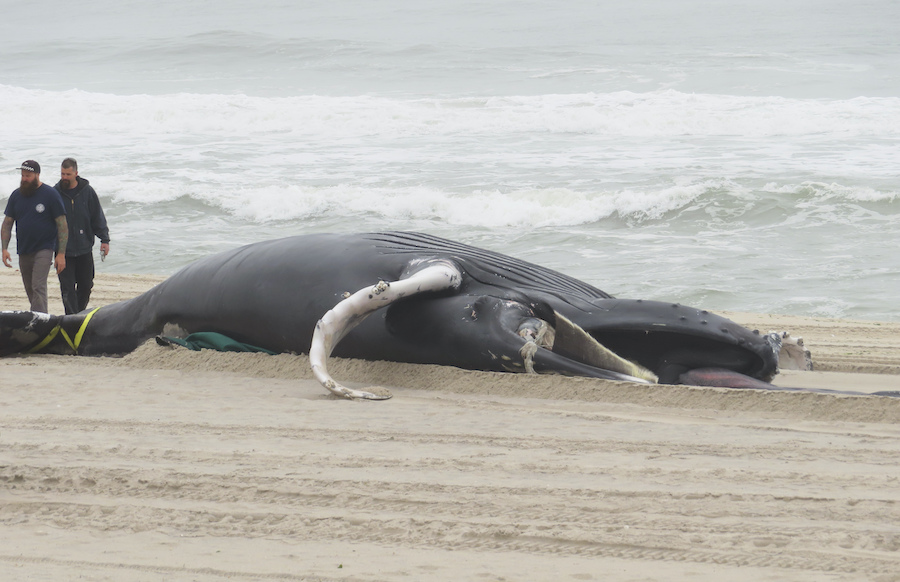
For more than a century, Long Beach has been tying swaths of its identity and chunks of its fortune to a succession of strange and incoherent events, icons and attractions—a box of chocolates that has included a beached whale, an international beauty pageant, a British luxury liner, an auto race and a gigantic fish tank.
Over the years, the collection—eclectic, artistic, eccentric or idiotic; you make the call—has provided can’t-stop-looking insight into the chronic fantasy/inferiority complex that somehow seems to beset every generation of Long Beach leaders. The condition is typically driven by the conviction the city must pursue some kind of international profile or tourist draw to put itself on the map between Los Angeles and Orange County.
Recently, however, there are signs these symptoms are relaxing. There is evidence that Long Beach residents are increasingly aware and appreciative of the potential of their own city, an attitude manifested by the homegrown events that are blooming in neighborhoods across Long Beach, from First Friday’s monthly party along Atlantic Avenue in Bixby Knolls to the retro-vibed collection of shops, bars and general hipness that flourishes on Fourth Street to the massive insanity of downtown’s Zombie Walk.
Into that mix now comes perhaps the most ambitiously transformative project yet. A consortium of city staff, professional consultants and particularly skilled residents is cultivating a wide-ranging but meticulously executed plan: to use bicycles as day-to-day transportation in and around Long Beach. The organizers are using federal grants to fund the infrastructure and the education. And the early returns—okay, they’ve been at this for three years, but when you’re talking massive social change, that’s early—look impressive.
Downtown is garlanded with dedicated bike lanes—created by taking a lane away from cars and tricking them out with their own traffic signals—that shepherd eastbound traffic on Broadway and westbound traffic on Third Street. In Belmont Shore, the crowded and colorful Second Street shopping district is accommodated by so-called “sharrows”: lanes shared by bikes and cars and identifiable by a stunning streak of green paint. Throughout the city are experiments in such traffic-calming techniques as bike boulevards and traffic circles.
And yet, there are some growing pains. . . . Aren’t there?
Charlie Gandy, the preppy pied piper of Long Beach’s bicycling mission, a guy who almost always has something nice to say, gets quiet. He has been at this a long time, and he defines his objective—social change—long range, and he knows that takes a long time. Gandy is careful. He’s patient. But he also knows the value of a well-placed opinion. And besides, sometimes he gets pissed off.
Fact is, Long Beach’s downshift into its burgeoning bike culture has been a little choppy—hasn’t it, Charlie?
“It has been an extraordinary story,” Gandy says with somber satisfaction.
And pauses.
“It’s just that I am surprised at some of the institutions that have been so slow to embrace this stuff,” he finally continues. “But there are people whose knee-jerk reaction is to be opposed to anything new.”
He pauses again.
“I’m from Texas,” Gandy begins again, “so I know a lot about backwater—and we’re a long way from that. But people who resist change just because it’s change? I find it frustrating in a city that’s supposed to be an innovative city.”
No doubt, a cross-section of Long Beach can constitute a tough crowd—highly suspicious, deeply cynical, reflexively negative—and many of them haven’t kept secret their disapproval of the biking makeover, which has been expressed with rolling eyes, insults and anger. These people can be jerks, but their reactions probably aren’t knee-jerk. Their emotions seem more complex than contrarian.
Long Beach has a history of big-concept projects that didn’t pan out, and many still weigh on the city’s ego and economy. Over time, these experiences tend to translate the language of opportunity into words of warning. It’s a place where a proposal can feel like a con, a plan feels like a scheme, and an investment feels like a sucker’s bet. And when these projects are rolled up in some fresh civic identity—icon, slogan, festival, whatever—it’s doubling down on the misery. Resistance? This sounds like the recipe.
But at a moment when the people of Long Beach might be calmed and convinced by a clear and simple vision, they’re getting a flashback to the old formula—the one that ties together those swaths of identity and chunks of fortune—combining the Long Beach brand with the bicycle project’s goal with a slogan that seems to describe a double hallucination.
“Long Beach: The Most Bike-Friendly City In America.”
Which, of course, isn’t true.
Says Gandy: “Yet.”


11 Comments
Long beach’s rise in Bicycling Magazine’s recent nationwide ratings of US cities to #19 is attributed to all of the money spent on bicycle infrastructure projects. Bottom line, Long Beach BOUGHT their ranking by spending so much money on projects (like the downtown bike lanes) deemed bicycle friendly.
According to the magazine, Long Beach’s challenge in the future will be to actually get people to ride bicycles now that the money has been spent on the infrastructure.
A perfect example is the new bike lanes that were installed downtown last year that cost taxpayers over a $million. Seldom, if EVER, is a bicycle found in those expensive bike lanes. Not sure I agree with the “build it and they will come mentality,”especially when that money could be better spent hiring more cops to keep the crime down.
I appreciate the city’s efforts in being more bike-friendly but I do wonder at times whether the city is trying a little TOO hard. The funding for those downtown bike lanes did come from a federal grant earmarked for infrastructure, not from city coffers, so it’s not really relevant to law enforcement funding.
I’ve biked those dowtown lanes many times and think they’re pretty cool, but I understand the criticsm too. I’m *hoping* those lanes can be the foundation segments for a grander master plan that extends beyond the current Magnolia/Alamitos boundaries and which can attract more local and out-of-town tourist cyclists.
All kind of wishful, build-it-and-they-will-come thinking, I know.
I’m back in Long Beach for a few days after having spent the last three years bicycling around the US and overseas and have been following reports of LB’s bike transformation on the web. Just a few hours talking to different cyclists on the street and old bike friends this is what I’ve heard.
-there is no bike advocacy group in Long Beach
-there is no Bicycle Advisory Committee or any mechanism where stakeholders can share meaningful input
-signal lights still don’t detect bikes
-the transitions from the cycle tracks in downtown are still terribly thought out and dangerous for the novice cyclists they are meant to attract
-there is no good relationship between cyclists and law enforcement
-just rode the huge planted medians on Broadway which has made things WORSE for cyclists since they are not shareable lanes anymore, killing any chance for kids to use that as a bike route to school
plus side is there are a plethora of racks.
Hate to say it, but bike projects in Long Beach are like a NBA rookie that is all slam dunks and no fundamentals.
R
Biking Photographer, you’re back! I used to spot you and a female companion biking around my part of town and wondered where you’d gone!
Damn, you’re biking around the US and overseas. I wanna live you’re kind of cycling life.
For reference, here’s what Bicycling Magazine ACTUALLY says, not what a commenter above SAYS it says. Quite different.
Link: http://www.bicycling.com/ride-maps/featured-rides/19-long-beach-ca
Claims to Fame: Initiating a sea change in SoCal cycling culture. Long Beach’s slew of top-tier facilities, such as separated downtown bikeways and the nation’s first bike-commuter station, has neighboring cities salivating. The Tour of Long Beach offers rides of 31 and 62 miles, plus the 100-mile Cruz Gran Fondo—led by former Olympian Tony Cruz.
Biggest Challenge: Moving beyond infrastructure and developing more programs that promote cycling to the masses—such as Women on Bikes SoCal.
And again, for the full story for Dave’s readers, here is what The Biking Photographer himself wrote just a few months ago when he met with the many bike advocates in the city: http://pathlesspedaled.com/2011/09/is-long-beach-bike-friendly-yet/
I read in his story that the group he was part no longer exists, but there are others. And if there’s anyone easier to reach in the city with thoughts and input than bicycle coordinator Allan Crawford, I’ve yet to met that person.
What the comments of Russ and others makes very clear is just how big of a job it is to create a truly strong, vibrant, inclusive and well-known bicycle advocacy organization for a city, or region, even with the amazing outreach capabilities of social media. Here’s a recap of what myself, colleagues, friends and new connections have been working on locally for advocacy from the female perspective:
Seven months ago I launched the Women on Bikes SoCal initiative from Long Beach. Our first campaign is raising money to create 12 new top female bicycle safety instructors certified by the League of American bicyclists. This could not have happened without the collaboration and support of our 501c3 Bikeable Communities, Andrea White-Kjoss the President and COO of Bikestation, Vice Mayor Suja Lowenthal, Bike Long Beach and the Los Angeles County Bicycle Coalition. This is the first time in the U.S. the program will be offered as a scholarship just to women. The women are from South LA, East LA, the greater South Bay and five of the candidates are super bright, dedicated women from Long Beach (including local bike tour operator and advocate Elizabeth Williams of Cali Bike Tours and bike advocate Bernadette McKeever of Long Beach Cyclists). Once we have these new female trainers our next goal is to create time efficient and inexpensive or free bicycle safety pilot programs in underserved areas of Long Beach for those who need them most.
We hope to create an active living academy focused at youth in central and west Long Beach and we’ve already reached out to Evan Kelly and The Hub Community Bike Center for possible collaboration. We are avidly working on grant applications and have made very promising connections. I’d call that bicycle advocacy.
With Bikeable Communities we have hosted fundraising events for the California Bicycle Coalition, a presentation by top national bike advocate Mia Birk co-hosted by April Economides and Green Octopus Consulting, ridden in the Belmont Shore Christmas parade with 40+ riders, promoted local rides (including Cyclone Coasters), hosted a booth at BikeFest, hosted a female only ride + bike portrait session with Shereef Moustafa, helped raise volunteers for the Los Angeles County Bicycle Coalition, on 6/20 will host an advocacy training with Charlie Gandy here in Long Beach (yes, it’s open to men too please consider joining us) and will help co-host the first ever national Women’s Bicycling Summit on 9/13 plus a Cycle Chic urban bike fashion event at the end of the national Pro Walk/Pro Bike conference here in Long Beach. Our promotion materials for the Cycle Chic event include models who are local bike entrepreneurs who support bicycle advocacy Joseph Bradley of Pedaler Society and Nicole Maltz of the Bicycle Stand. The apparel they wear in the photo is by local LB companies by Yellow 108 and The Academy both who avid bicyclists and support advocacy. We have a website with monthly updates and a strong and growing social media presence. We have the talented local bicycle advocate April Economides of Green Octopus consulting writing a regular Bikes Mean Business column, active living advocate Kerri Zane on bikes for fitness, pieces by young fresh talent still in and fresh out of school, and we are attracting members of all ages and races. We send out regular emailers from both Women On Bikes SoCal and Bikeable Communities to hundreds of interested people to help support bicycle advocacy events like the recent Kidical Mass that brought out over 300 children and their families all by the efforts of Blair Cohn and the Bixby Knolls Business Improvement District. Bikeable Communities is also making sure the Desmond Bridge replacement will have bicycle access. I’d call that bike advocacy.
I am a fan of Russ and his work. He was one of the first local bike advocates I met. I follow Russ on twitter and Facebook and have sent him more than one email/tweet asking him if his girlfriend Laura would like to be profiled on Women on Bikes SoCal. I promote his work and journey via social media. But apparently Women On Bikes SoCal is not on his radar yet. Yet we have been profiled in Momentum Magazine, KCET’s LAObserved, Supervisor Zev Yarovslofsky’s blog, Channel 7 news,Channel 9 new, the Gazettes, the Press Telegram and more. Too bad he hasn’t noticed us yet. We would have liked to shared with him personally even more of the advocacy efforts we’ve got going on here from many different angles. I’ve just scratched the surface.
RAntonette,
I have the print copy of this magazine at home and it says considerably more than the link you provided. And also, it does say what I wrote above.
I wish we could do something in Long Beach like the CicLAvia thing. I believe Long Beach is ready for it and I think it would show naysayers just what is possible. I don’t see any reason why there can’t be a dedicated bike lane (protected bike path) in a lot of areas in Long Beach.
I think the bike lanes are still a joke. Hardly anyone ever rides them. The few I have seen the bicyclists and cars almost get into major accidents. They both do not watch out for each other. Waste of money in my opinion and a few others I have heard from. Just go onto the Long Beach facebook page. There have been a few conversations about it.
Biking is making LB a more vibrant place to live. I love riding my bike to the shore and down the boardwalk to Belmont Brewery for lunch. And, in the early hours on weekends, I troll around downtown. The downside to this vibrance is that a lot of bikers are rude pigs and have in your face attitudes — not sharing the road with cars, ignoring traffic laws and streaking down side walks expecting us on peds to step aside. So, of course, the next thing happens – new laws and fines to “make” us be “considerate” citizens.